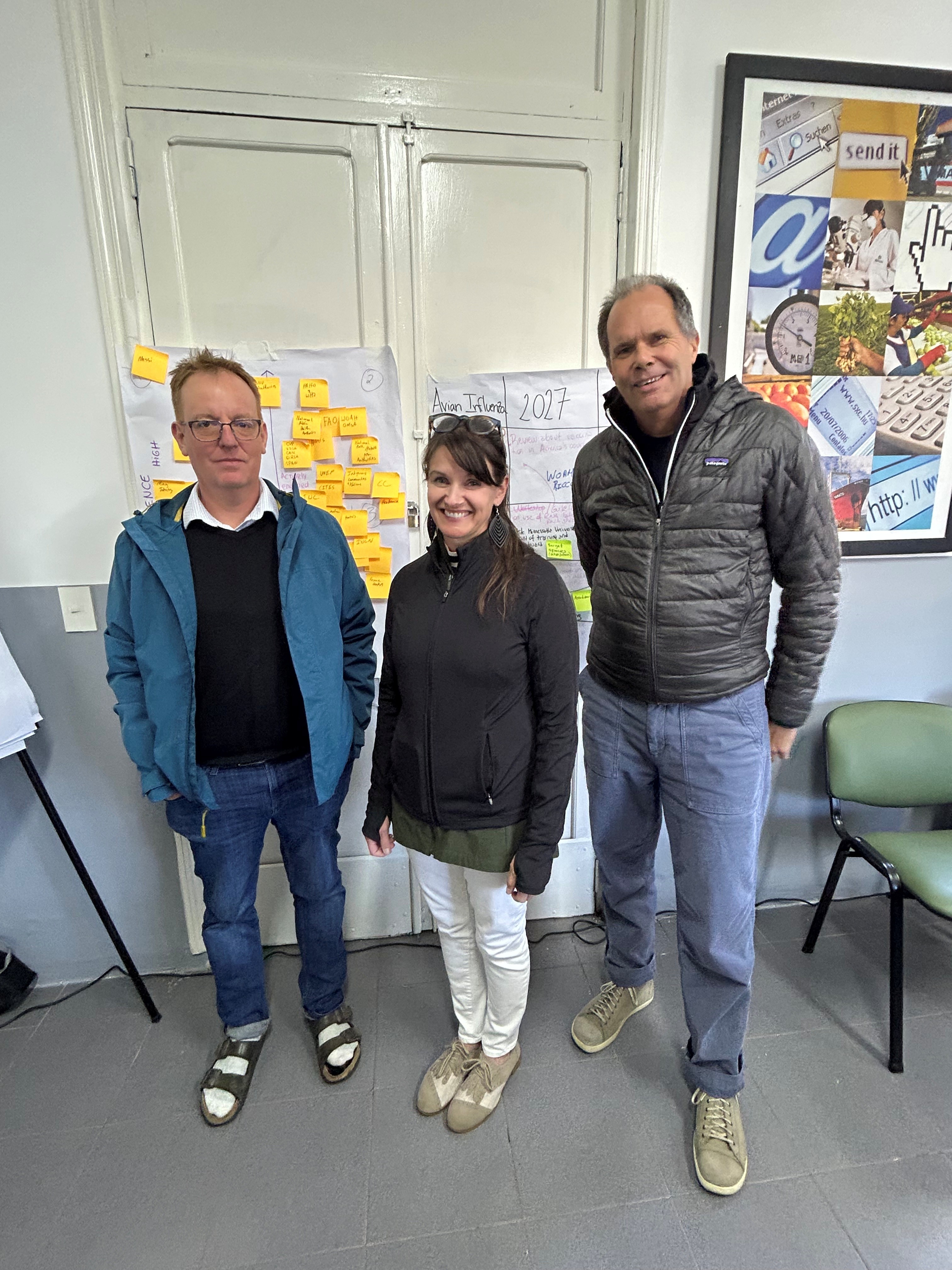
From left to right: Damien Joly, Chief Executive Officer of the Canadian Wildlife Health Cooperative (CWHC); C. LeAnn White, Director of the National Wildlife Health Center (NWHC) of the United States Geological Survey (USGS); and Chris Walzer, Executive Director of the Wildlife Health Program at the Wildlife Conservation Society (WCS). Together, their institutions form the multinational WOAH Collaborating Centre for Wildlife Health, providing scientific expertise and technical support to strengthen wildlife health surveillance, research, and capacity-building worldwide.
Experts from the WOAH Collaborating Centre for Wildlife Health discuss the region’s most pressing wildlife disease threats, the importance of cross-sectoral surveillance, and how international collaboration can help countries strengthen preparedness and response.
Chris Walzer: Clearly, avian influenza is by far the largest threat to wild birds and marine mammals across the continent. At this stage, it is difficult to predict how the situation will evolve over the coming years. The initial impact in 2020 and 2021 was massive, and we are still seeing significant impacts today.
As animal populations develop immunity through the acquisition of antibodies and adapt through a combination of immunological, demographic and ecological processes, it will be important to monitor how the disease evolves and how its impact changes over time.
More recently, both Mesoamerica and North America have been facing an emerging disease threat from new world screwworm. The disease had been absent from North America for decades, but has now reached the United States, generating significant concern and attention. The full extent of its impact remains unclear, but we are actively working to address this emerging threat.
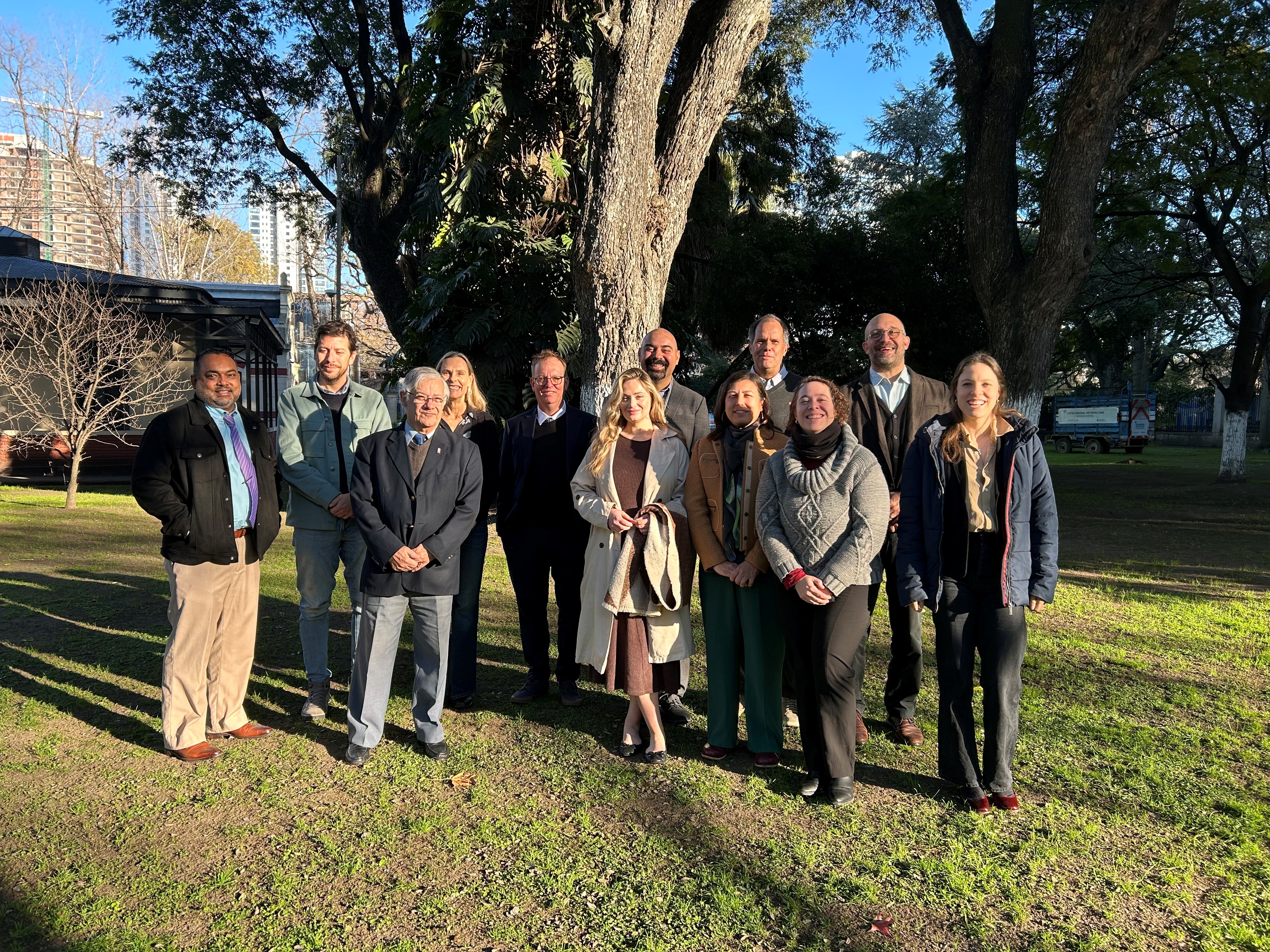
In 2025, WOAH established a Regional Coordination Group on Wildlife Health for the Americas. Bringing together wildlife health focal points and technical experts from across the region, the group is responsible for developing, implementing, and monitoring a regional work plan aimed at strengthening wildlife health surveillance, fostering cross-sectoral collaboration, and enhancing preparedness for emerging disease threats at the wildlife-animal-human interface.
Damien Joly: We have had great success working across sectors, including with public health and other partners, to build a collaborative approach to wildlife health surveillance. I think that is exactly what this group is working to achieve: fostering collaboration across different sectors.
No single organisation has sufficient resources to address these challenges on its own. By working together, we can pool the resources and expertise we have and make meaningful progress. I think the first step is therefore to build these collaborations and strengthen these relationships, so that we can work together towards a common goal.
C. LeAnn White: Collaboration between the animal health, public health and environmental sectors is essential for both the early detection of and effective response to diseases in wildlife. Sometimes, it is difficult to predict when and where a disease will be detected first. We have seen several recent examples with diseases such as New World screwworm and highly pathogenic avian influenza.
Ensuring that surveillance is taking place across all relevant sectors is therefore critical, because we cannot know in advance where a disease may first emerge or be detected. Equally important is ensuring that information flows effectively between sectors, so that detections are communicated promptly and all relevant stakeholders can work together to determine the appropriate response and coordinate actions across the different sectors.
Ultimately, strong collaboration and information-sharing enable us to detect threats earlier and ensure that responses are coordinated and effective across sectors.
Chris Walzer: Our consortium brings together scientific expertise, operational field experience, surveillance capacity, policy engagement, and direct support to countries across wildlife health and One Health. This broad range of expertise. This broad range of expertise allows us to learn from one another and address increasingly complex challenges. Today’s issues require transdisciplinary approaches, and that diversity of knowledge is one of our greatest strengths. It enables us to provide countries with well-rounded, evidence-based support tailored to their needs.
C. LeAnn White: Building on that, each of our institutions operates in different fields and contexts, giving us access to a variety of structures, networks, and ways of working. This allows us to offer complementary perspectives on collaboration across sectors, including government, academia, and non-governmental organizations. By drawing on these diverse experiences, we can help countries identify effective approaches that are adapted to their specific settings and challenges.
More information: