At the end of 2025, the World Organisation for Animal Health (WOAHhighlights the main actions that contributed to strengthening animal health and welfare in the Americas.
—
As part of the Global Framework for the control of Transboundary Animal Disease (GF-TADs), activities focused on regional priorities were implemented in 2025. Through four expert meetings, new recommendations were published to prevent, detect, and control diseases that cross borders and threaten food security, livelihoods, and local economies, including African swine fever.
‘By working in a coordinated and strategic manner, we can strengthen the resilience of our systems for preventing and responding to transboundary diseases, as demonstrated by the progress we have made in eradicating foot-and-mouth disease in much of the region,’ Dr Conrad Estrada, Chair of GF-TADs.
The implementation of WOAH Standards provides the basis for preventing the spread of disease, while facilitating trade in live animals and animal products. In 2025, a regional workshop was organised in Argentina that included simulation exercises on negotiating agreements to maintain trade in the event of a health emergency.
A community of practice was also launched to monitor WOAH Standards development process. This innovative mechanism seeks to promote more active and inclusive participation by countries, ensuring that international standards reflect the needs and realities of the region.
This year, progress continued on the project to facilitate the international movement of competition horses, in collaboration with the International Horse Sports Confederation. Support was also provided for the launch of a new project to implement electronic veterinary certification in Latin America and the Caribbean, coordinated by the Inter-American Institute for Cooperation on Agriculture (IICA).
During 2025, the countries of the Americas reaffirmed their commitment to health transparency and international cooperation.
Throughout the year, 65 immediate notifications were reported through the World Animal Health Information System (WAHIS), alerting the international community to relevant events in the region, including cases of highly pathogenic avian influenza in poultry and cattle, as well as outbreaks of new world screwworm. In response to critical events, communication actions were implemented to ensure the timely dissemination of information. These actions included the organisation of webinars and the publication of official WOAH statements, contributing to a coordinated and evidence-based response.
In addition, more than 100 dossiers were submitted for the reconfirmation of official animal health status, strengthening safe trade and local economies. In 2025 was marked by the recognition of Brazil and Bolivia as foot-and-mouth disease free countries without vaccination, highlighting the progress of the region in eradicating this disease.
The Americas also recorded a 4% reduction in the use of antimicrobials in animals (between 2020 and 2022). These estimates are possible thanks to the active participation of Members in ANIMUSE, WOAH global database on antimicrobial use.
In 2025, a Coordination Group for Animal Welfare in the Americas was launched, a new regional mechanism aimed at supporting the identification of needs, prioritisation and implementation of activities in this area.
This launch represents a milestone for the region, which has a strategy approved by Members in 2012 but whose implementation has faced challenges. The new group, which met for the first time at an event in Uruguay, responds directly to these needs and establishes a clear path toward a region where animal welfare is integrated into public policy.
Animal welfare has scientific, ethical, economic, cultural and social dimensions. In the Americas, the diversity of production systems – from family-based to intensive models – and the economic importance of the sector make it essential to have mechanisms in place to harmonise practices and support Veterinary Services in the implementation of international standards.
Governance is key to moving the ‘One Health’ approach from aspiration to action. At the end of the year, WOAH, together with its regional partners in the Quadripartite Alliance – the Pan American Health Organization, the United Nations Environment Programme and the Food and Agriculture Organization of the United Nations – made significant progress in signing a joint declaration, including regional partners such as IICA and the International Regional Organisation for Agricultural Health.
This commitment establishes a formal framework for strengthening collaboration and addressing challenges at the human-environment-animal interface in an integrated manner.
Wildlife health is closely interconnected with animal, environmental and human health. The American continent is home to some of the most diverse ecosystems on the planet, and its wildlife plays key roles in ecological balance.
With the aim of integrating wildlife more systematically into the regional One Health agenda, an interdisciplinary coordination group was convened in 2025 to provide strategic advice and recommendations in this area.
In 2025, training activities were intensified to strengthen Veterinary Services. Training was provided to improve animal disease reporting in Caribbean countries, in Trinidad and Tobago, and a workshop was held in Costa Rica on the control of priority zoonoses in Central America, among other events. In addition, ten webinars open to the public were organised, with over 2,300 participants.
Under the Multi-Partner Trust Fund to Combat Antimicrobial Resistance (MPTF), Honduras was selected to receive technical assistance and funding to strengthen national programmes against AMR. Thanks to this project, a series of activities were defined with national authorities in 2025 and will begin to be implemented in 2026.
In Bolivia, a PVS follow-up mission was carried out as part of WOAH programme to evaluate and improve the quality of Veterinary Services. This mission included a component on rabies aimed at its eradication. Barbados and the Bahamas are expected to carry out a PVS mission starting in 2026 to strengthen their veterinary legislation.
‘The support of WOAH is essential, but so is the national commitment to creating the conditions necessary for the continuity of these missions and the implementation of their recommendations,’ said Dr Daza, Bolivia's delegate to WOAH.
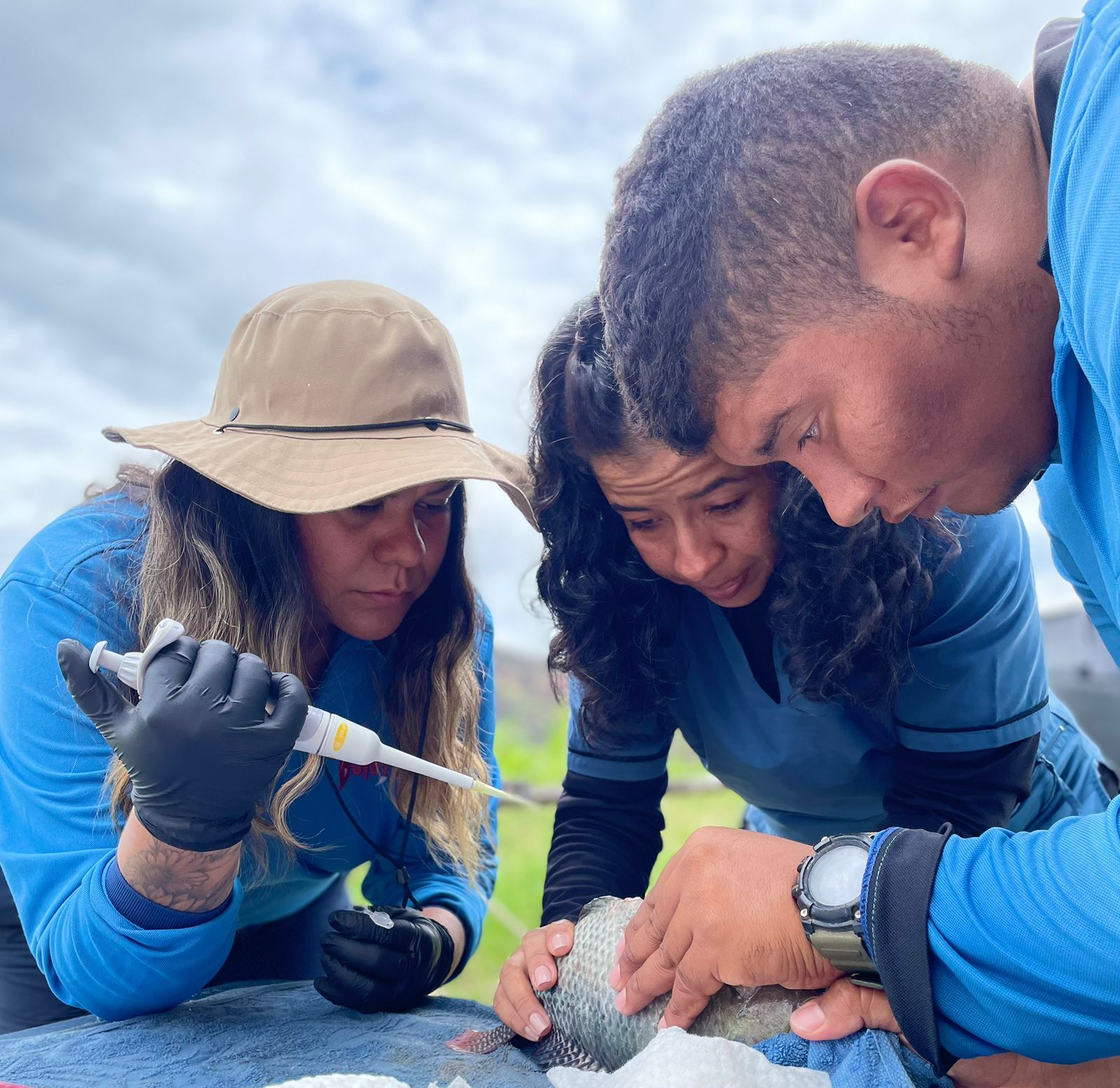
In cooperation with two of its Collaborating Centres, CASA and CIGB, WOAH launched the REASONS (improved access and legislation to veterinary products) project. This project seeks to improve access to and legislation related to alternative veterinary products in freshwater aquaculture. Its first phase is being developed in Brazil, Colombia and Mexico, where national workshops were held in 2025 to identify regulatory gaps and possible solutions. Paraguay will join in the next stage.
Aquaculture, like other livestock practices, requires the use of antibiotics to treat bacterial diseases. However, antimicrobial resistance limits their effectiveness, making it even more necessary to adopt safe and effective alternatives.
Faced with the reappearance of cases of new world screwworm in Central America, the COPEG Collaborating Centre played a key role in controlling the disease, as it is the only facility in the world that produces and disperses sterile insects.
Its actions included training laboratories in entomological diagnosis, training field staff in case management and sample handling, and producing and dispersing sterile flies in the affected countries. It also provided technical assistance to countries that began installing smaller-scale production plants.
In October 2025, more than 290 representatives of Veterinary Services and the veterinary industry gathered in Guadalajara, Mexico, to participate in the annual seminar of CAMEVET (Committee of the Americas on Veterinary Drugs). The meeting aimed to advance the harmonisation of standards for the registration and control of veterinary drugs, ensuring their quality, safety, and efficacy.
Likewise, in 2025, the International Dairy Federation and the International Meat Secretariat, strategic partners of WOAH and representatives of the private sector, organised their forums in the Americas region. WOAH participated in both events as a key space for promoting sustainable investments that strengthen animal health.
WOAH promotes close and ongoing relations with its Members in order to strengthen communication and ensure that actions reflect local needs.
Within this framework, and in order to deepen ties with Veterinary Services and advance the animal health agenda, the Director General of WOAH, Dr Emmanuelle Soubeyran, made numerous institutional visits in the region. During 2025, she visited Argentina, Chile, Canada, Brazil and the United States of America, where she held meetings with national authorities, representatives of the private sector, professional associations, academic communities and students, as well as participating in high-level international meetings such as the G7 Chief Veterinary Officers’ Meeting and COP30.
The Deputy Directors-General, Dr Francois Caya and Dr Montserrat Arroyo Kuribreña, contributed to this effort by participating in Caribbean Agriculture Week, organised by CARICOM in St Kitts and Nevis, and the International Forum on Veterinary Education in Mexico, respectively.
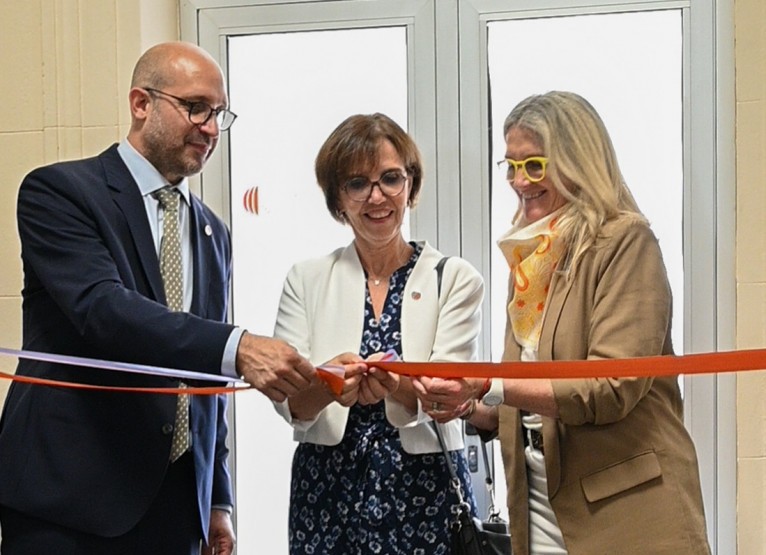
During her institutional visit to Argentina, the Director-General of WOAH officially opened the new offices of the Regional Representation for the Americas.
Maintaining our commitment to animal health in 2026