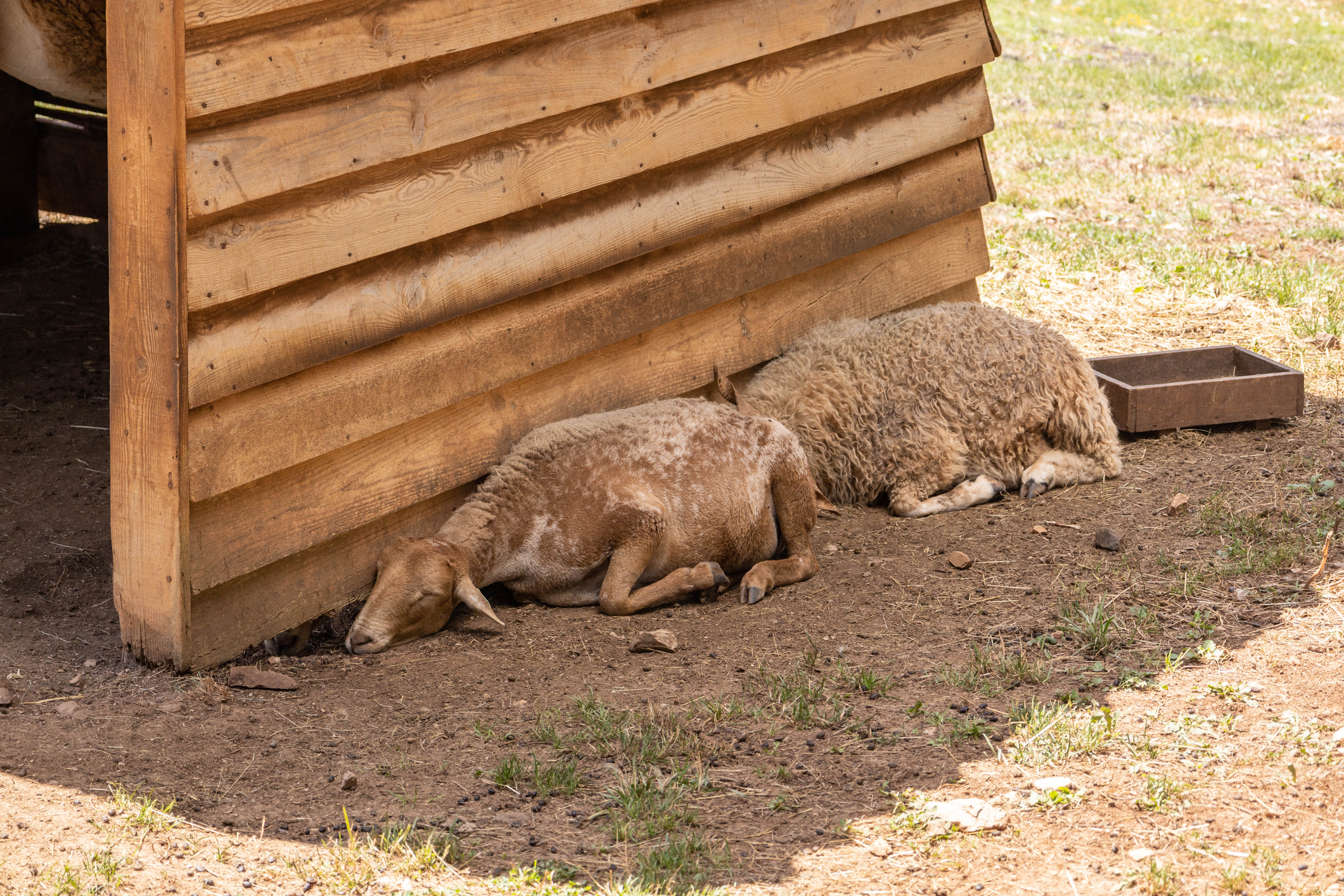
As world leaders gather for COP31, WOAH calls for animal health and Veterinary Services to be recognised as essential to climate action. Protecting animals from a changing climate can also help safeguard livelihoods, strengthen food security and build more resilient communities.
A farmer watches livestock struggle through another heatwave. A pastoralist travels further to find water for their animals. A veterinarian faces the challenge of detecting diseases in areas where they were previously uncommon.
Across the world, climate change is already affecting the health and welfare of animals, and with them, the lives of millions of people who depend on animals for food, income and livelihoods.
Yet animal health remains largely overlooked in climate policies and investments. As countries come together at the 31st United Nations Climate Change Conference (COP31), the World Organisation for Animal Health (WOAH) is calling for a shift in perspective: animal health is not only threatened by climate change. It can also be part of the solution.
The effects of climate change on animals go far beyond rising temperatures. Heat stress can weaken animals’ immune systems, reduce fertility and productivity, and compromise their welfare. Droughts and floods can threaten their survival, while wildfires destroy habitats and disrupt ecosystems. Extreme weather can also damage veterinary infrastructure, making it harder to deliver essential animal health services when they are needed most.
Climate change is also altering the way diseases spread. Changes in temperature and rainfall can influence where disease-carrying insects and other vectors survive, how long they remain active and which animal populations are exposed. This creates new challenges for disease surveillance and prevention.
These impacts do not affect everyone equally. Smallholder farmers, pastoralists and communities that rely heavily on livestock are particularly vulnerable. When animals become sick or die, families may lose not only a source of food but also their income and financial security. The consequences extend beyond individual farms, affecting food systems, biodiversity and the health of people and ecosystems.
While the risks are growing, improving animal health also offers opportunities to strengthen climate resilience. Healthy animals are generally more productive and make better use of available resources. Preventing diseases and reducing animal losses can help livestock systems produce more efficiently, potentially lowering greenhouse gas emissions per unit of food produced.
At the same time, investing in animal health helps farmers and communities withstand climate-related shocks. Animals that receive appropriate veterinary care, disease prevention and protection from environmental stress are better equipped to remain healthy under changing conditions.
These benefits depend on local circumstances, the diseases involved and the production systems concerned. Animal health interventions must therefore be part of broader efforts to develop sustainable livestock and aquaculture systems.
Protecting animal health can contribute to both climate adaptation and mitigation, while supporting food security and livelihoods.
As climate-related risks become more complex, countries need to move beyond responding to emergencies once they occur.
Veterinary Services have a central role in anticipating threats, preventing disease outbreaks and helping communities prepare for changing conditions. For example, combining animal disease surveillance with weather and environmental information can help countries identify emerging risks earlier. Strong laboratory networks, reliable vaccine supply chains and trained veterinary professionals are equally important to maintain essential services during extreme weather events and emergencies. Veterinary Services must be involved in advance in disaster management preparedness and considered essential services under civil protection systems.
WOAH is already putting this approach into practice. Through its PROVNA project in North Africa, WOAH combines satellite-derived environmental and climate data with animal health information to better understand conditions that favour the presence of disease vectors and the transmission of vector-borne diseases. Building on this experience, the PROVBAC project extends the approach to the Western Balkans and Caucasus, helping countries move towards more targeted surveillance and earlier detection of emerging risks.
This requires sustained investment in Veterinary Services, including in communities where access to veterinary care is already limited. Through its Performance of Veterinary Services (PVS) Pathway, WOAH supports its Members in identifying gaps in their veterinary systems and prioritising improvements that can strengthen their preparedness and resilience.
A One Health approach is also essential. Because climate-related threats affect animals, people and the environment, addressing them requires collaboration across veterinary, public health, environmental and other relevant sectors.
Despite its importance, animal health receives limited attention in climate policy and financing.
According to a 2025 report by HealthforAnimals, an estimated 0.01–0.02% of global climate finance is directed towards livestock health. This illustrates the gap between the potential contribution of animal health and the resources currently devoted to it.
WOAH calls on governments and partners to better integrate animal health into national climate strategies, including Nationally Determined Contributions (NDCs), National Adaptation Plans (NAPs) and biodiversity frameworks.
This means recognising Veterinary Services as essential infrastructure for climate adaptation, strengthening animal health surveillance and data systems, and ensuring that animal health interventions are considered in climate investment priorities.
Better evidence is also needed to demonstrate how investments in animal health contribute to adaptation, resilience and emissions reduction. Measuring outcomes will help governments make informed decisions and direct resources where they can have the greatest impact.
Climate change is transforming the conditions in which animals live, diseases emerge and Veterinary Services operate. Preparing for these changes requires action across sectors and sustained political commitment.
As the international community discusses the future of climate action at COP31, WOAH calls for animal health to be recognised as an integral part of the response. Through its international standards, technical guidance, animal health information systems and capacity-building programmes, WOAH works with its Members and partners to strengthen Veterinary Services and support a One Health approach to climate-related challenges.
As WOAH Director General Dr Emmanuelle Soubeyran emphasised during a COP31 side event on climate-resilient One Health systems:
“There can be no truly climate-resilient health system without resilient animal health systems and Veterinary Services.”
Her message underscores the importance of recognising animal health as an essential component of climate resilience, policies and investments.
Learn more: