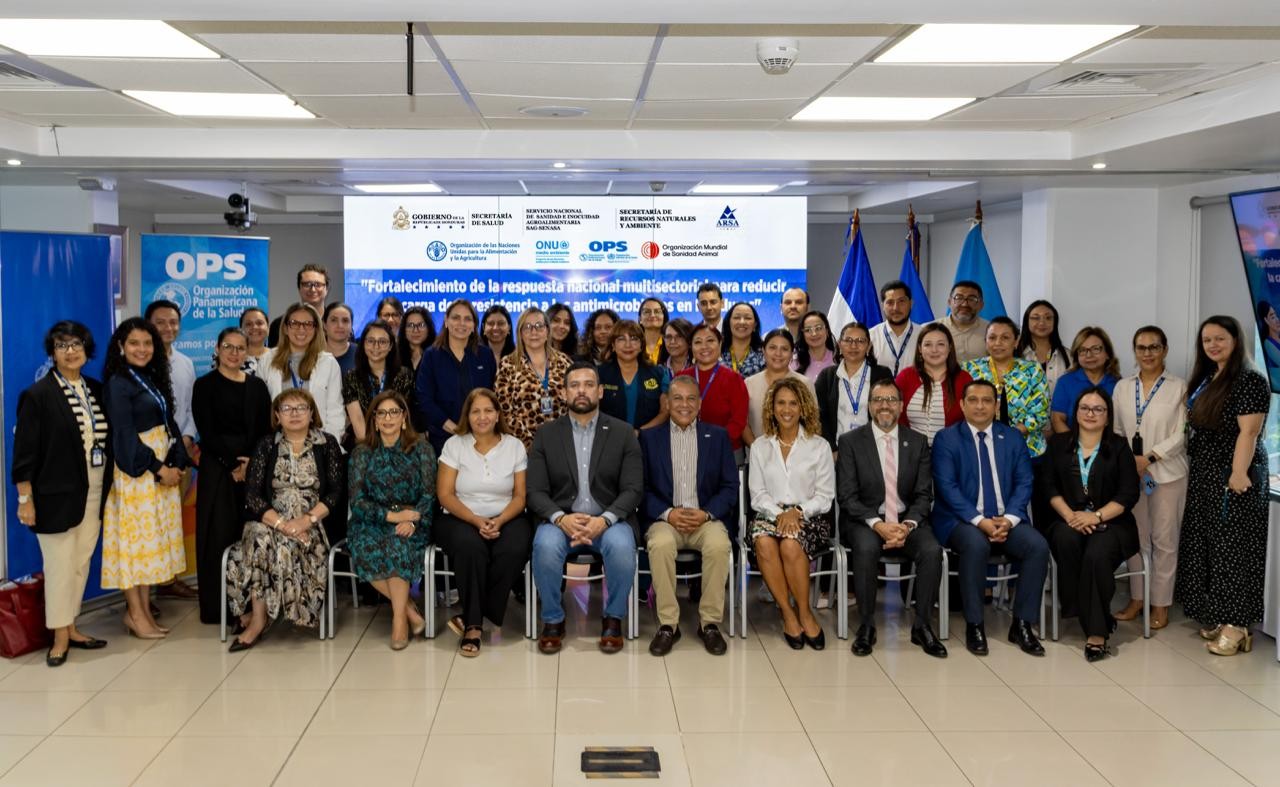
Tegucigalpa, Honduras, 21 September 2026. Honduras has taken a strategic step to protect the health of its population, strengthen food security and preserve the effectiveness of antimicrobials with the launch of the project “Strengthening the national multisectoral response to reduce the burden of antimicrobial resistance in Honduras”, funded by the Multi-Partner Trust Fund on Antimicrobial Resistance (MPTF-RAM). The initiative will run for 24 months and involve an investment of around US$1 million, with the participation of WOAH, PAHO/WHO, FAO and UNEP, in close coordination with national institutions.
The project will accelerate the implementation of the national response to antimicrobial resistance (AMR), strengthening the joint work of SESAL, SENASA, ARSA and SERNA, amongst other national stakeholders. This coordination recognises that AMR is not exclusively a human health issue: it also affects animal health, food production and the environment and therefore requires a coordinated response under the One Health approach.
Specific benefits for Honduras
Among the main expected benefits is the strengthening of national surveillance of antimicrobial resistance and use, through the modernisation of information systems and the development of interoperable tools that will provide higher-quality data to guide the authorities’ decisions.
The initiative will also help to improve the prevention and control of infections, particularly in primary care; promote the responsible use of antimicrobials; strengthen biosecurity in animal production; and drive education and awareness-raising initiatives aimed at professionals, producers and the general public.
Another significant development will be the more decisive integration of the environmental dimension of AMR. The project includes measures relating to wastewater and the final disposal of pharmaceutical products, as well as the development of a model for the separate collection of pharmaceutical waste involving both the public and private sectors.
From a project to sustainable capacities for the country
One of the central elements of the initiative will be to strengthen Honduras’ capacity to sustain these actions beyond the cooperation period. To this end, the project envisages the development of a comprehensive financial framework for the implementation of the National Action Plan, the strengthening of regulatory frameworks, and the progressive incorporation of the operating and maintenance costs of the systems developed into the budgetary planning of national institutions.
In this way, the project aims to act as a catalyst for sustainable transformation, strengthening governance, monitoring, institutional capacity, equity and environmental sustainability. It will also enable progress towards greater integration of information from human, animal and environmental health sectors to support evidence-based decision-making.
The launch brought together officials from the Ministries of Health, Agriculture and Livestock, and the Environment, as well as representatives from the organisations of the Quadripartite Alliance, the United Nations, academia and other institutions involved in the national response to AMR, reaffirming that tackling this threat requires national leadership, international cooperation and coordinated action across sectors.
Through this initiative, Honduras is moving towards a key objective: to preserve the effectiveness of antimicrobials for present and future generations, whilst strengthening health systems, food production and safer, more resilient environments.
For more information: