The Second Observatory Monitoring Report is now available, offering fresh insights into the global uptake of animal health standards. The report highlights how Brazil not only implemented zoning effectively but also played a key role in shaping the international standards underpinning this practice. Initially used as a tool to eradicate foot and mouth disease, zoning has since proven to be a powerful mechanism for accessing international markets. These experiences demonstrate why the report’s recommendations may be particularly valuable for decision-makers worldwide.
The core mandate of the World Organisation for Animal Health (WOAH) is to establish international standards that ensure animal health and welfare, support disease control and eradication, and facilitate the safe international trade of animals and animal products. These standards can be understood as agreed-upon measures adopted by all countries, which in turn inform national strategies and regulations related to animal health and welfare.
Marcelo de Andrade Mota is the Director of the Veterinary Services of Brazil and the WOAH Delegate for the country. In 2025, he led the successful effort to have Brazil recognised as foot and mouth disease-free across its entire territory. Foot and mouth disease (FMD) is one of the six diseases for which WOAH grants official disease-free status. The implementation of WOAH zoning standards – which Brazil helped to develop – played a crucial role in this achievement. Marcelo de Andrade Mota is therefore well aware of both the potential and the challenges associated with these standards:
“I think the most interesting part of WOAH’s standard-setting process is that it is based on consensus, which is essential for enabling countries to actually implement the standards. That said, we have to be honest: we delegates agree on standards in Paris at WOAH, and that is great. But once we return home, we have to do our homework. We must follow up, implement the rules in our national context, and negotiate with relevant stakeholders. This can be challenging, but the fact that these standards are set through consensus serves as a reminder of the importance of their uptake.”
To assess if and how standards are implemented by countries, WOAH’s Observatory has published its Second Monitoring Report. Brazil’s case study provides a clear example of the importance of standards and the positive impact they can have at multiple levels.
The Second Observatory Monitoring Report provides WOAH and its Members with insights and recommendations on the use and implementation of WOAH standards. Based on an ambitious meta-analysis of multiple data sets, both internal and external to WOAH, the report is designed as a practical tool to help inform the future strategy of WOAH and its Members. For this reason, it will be published every five years, in alignment with the cycles of WOAH’s Strategic Plans.
The full report is accessible online and covers topics including trade and sanitary measures; self-declarations and official status; movement control within countries and territories and border precautions; zoning and compartmentalisation; antimicrobial use and antimicrobial resistance; and the implementation of the One Health approach. Factsheets and interactive dashboards are also available, allowing users to consult and extract information easily.
Zoning is a practice that allows Veterinary Authorities to divide a country’s territory into smaller areas, each with animals of a specific health status for a given disease. This way, if an outbreak occurs in one area, it can be contained without affecting other zones, allowing activities and trade to continue as usual in disease-free regions. To implement zoning effectively, countries must establish animal identification, movement controls and biosecurity measures. Maintaining disease-free zones supports the safe production and trade of animals and their products.
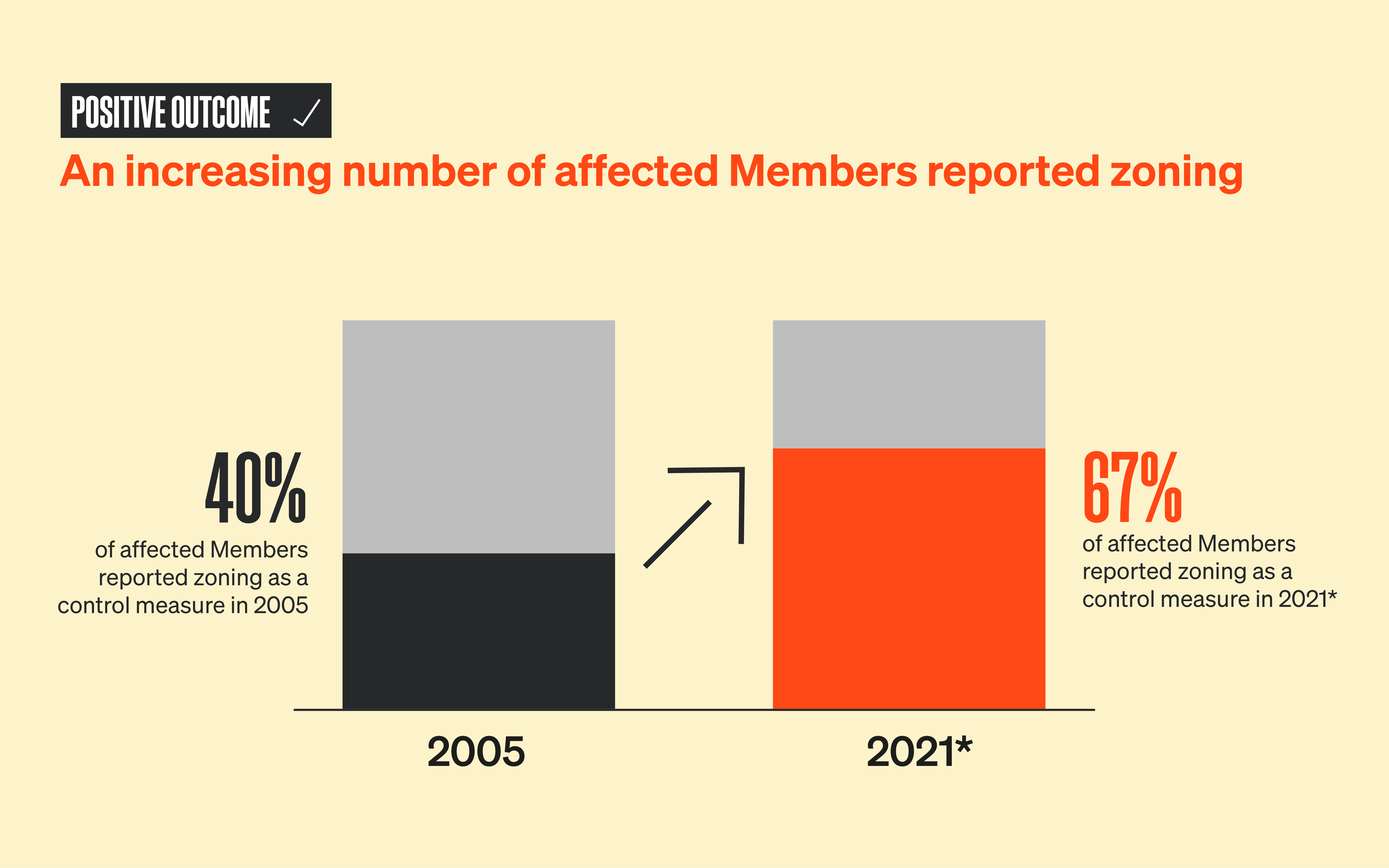
The percentage of WOAH Members affected by a disease reporting the use of zoning as a control measure raised from 40% in 2005 to 67% in 2021. *2021 is the latest year when the available data are the most complete.
The introduction of the concept of zoning in Brazil was closely linked to the fight against FMD, during a period of rapid growth and rising demand for improved meat production. As Marcelo de Andrade Mota explains:
“Since the 1950s, the goal of eradicating FMD has shaped the way we designed our Veterinary Services across the country. It boosted the pharmaceutical industry for vaccine production and eventually influenced our approach to zoning as well. Brazil is a very large country: if we wanted to make it FMD-free, we knew we had to work in smaller areas, dividing the country into zones and prioritising them based on needs and the capacity of local Veterinary Services.”
Marcelo de Andrade Mota Director, Veterinary Services of Brazil and WOAH Delegate.
For a country like Brazil, now one of the world’s largest meat producers and exporters, zoning is more than a tool to eradicate disease. In its new FMD-free era, Brazil has established “peacetime” zones, as Dr. de Andrade Mota calls them, which can be activated if the disease reoccurs. If a case were detected, the affected zone would be isolated, while farmers in other zones could continue moving animals and running their businesses without disruption.
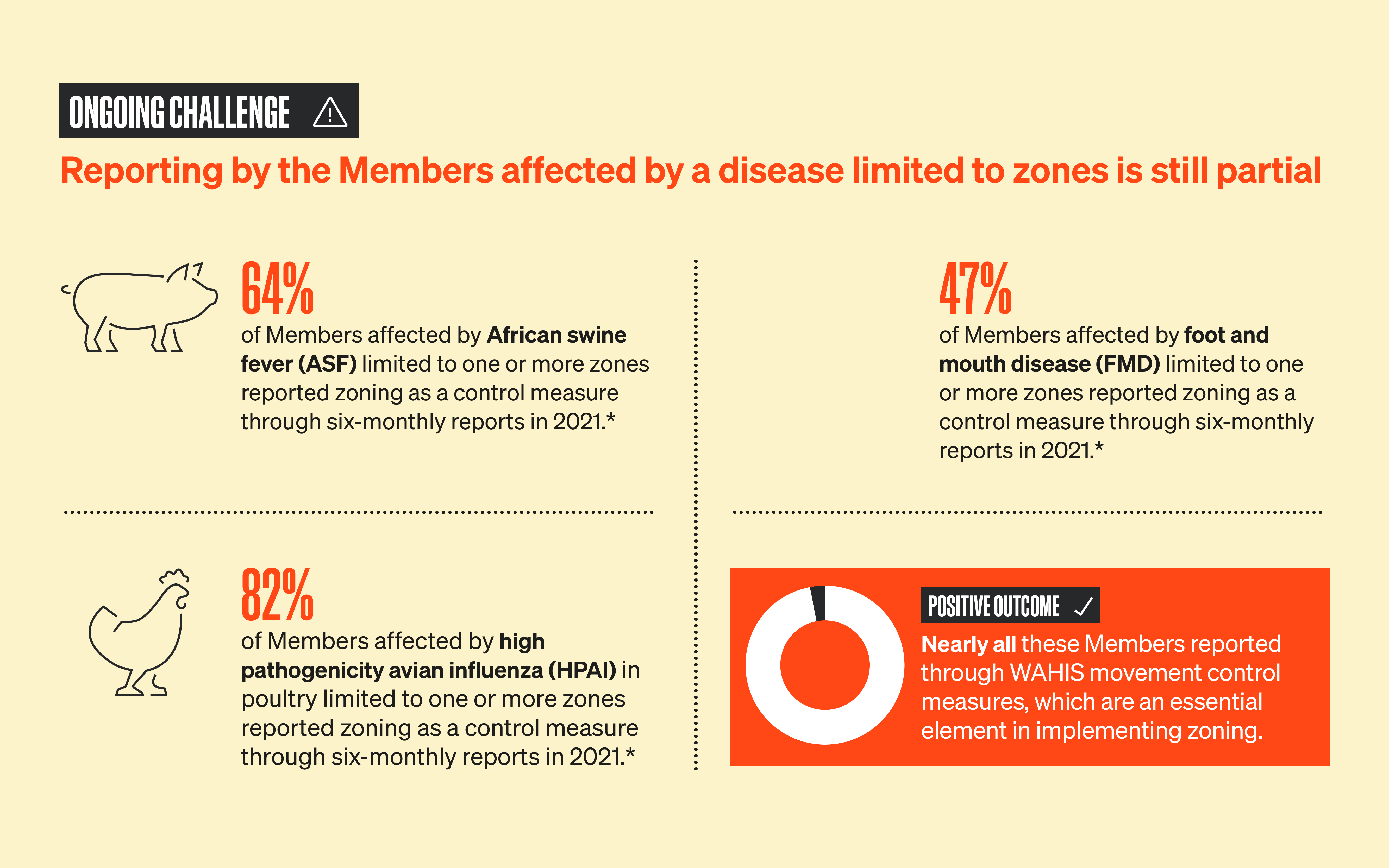
The reporting of zoning as a control measure when a disease is present in one or more regions of WOAH Members varies greatly depending on the disease. *2021 is the latest year when the available data are the most complete.
The Second Observatory Monitoring Report provides practical recommendations for both WOAH and its Members to improve the implementation of these standards. For example, WOAH recommends that Members apply functional measures, such as movement controls, to support zoning. It also recommends considering using the measure alongside WOAH mechanisms such as official recognition of status and self-declaration, which can facilitate bilateral trade agreements. This approach aligns closely with Brazil’s experience and could resonate with the interests of many other countries.
Marcelo de Andrade Mota Director, Veterinary Services of Brazil and WOAH Delegate.
This would be possible thanks to international standards. For a country to have its zoning strategy endorsed by WOAH, it must comply with WOAH standards. However, this is not a one-way process in which countries simply adapt to externally set rules. Drawing on its domestic experience and successes, Brazil has been actively involved in discussions on zoning standards since the 1980s, helping shape them through consensus with other countries. As Dr. de Andrade Mota explains: “Implementing WOAH recognised standards is a game-changer. They not only safeguard animal health and elevate Veterinary Services, but also unlock access to global markets, drive economic growth, and position countries as trusted partners in a secure, sustainable livestock supply chain.”